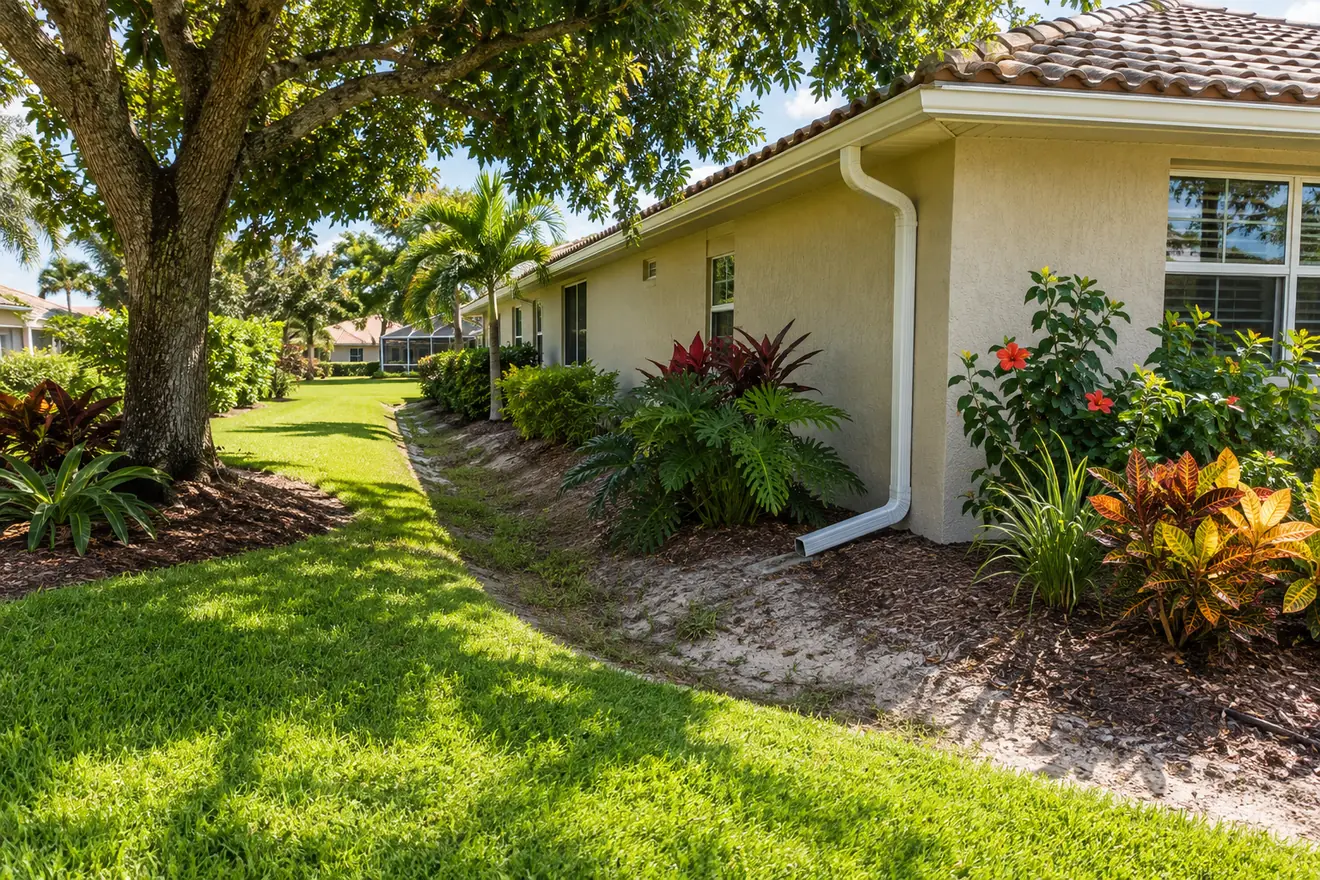
Landscape design in Fort Myers is the process of planning a yard around its real conditions (sun and shade, drainage, sandy soil, salt exposure and the upkeep you are willing to do) before choosing any plants or hardscape. In practice it means a site survey, a base plan, plant selection by mature size, an irrigation layout and a call to 811 before any digging. Florida does not license landscape designers, so the plan itself is what you judge.
How landscape design works for a Fort Myers yard
- Survey the site. Record sun, shade, wet spots, soil, salt exposure and rules (see below).
- Decide how you use the yard. Entry, parking, play space, outdoor dining, pool deck, privacy and views each need their own zone.
- Draw a base plan. Sketch the house, lot lines, walkways, trees, utilities and irrigation to scale so every later choice fits real dimensions.
- Place beds, paths and structures first, plants second. Decide where turf, beds, paving and drainage go, then fill the beds.
- Select plants by mature size and conditions. Group plants with similar water needs.
- Plan irrigation and maintenance. Match irrigation zones to the planting groups and estimate the weekly and seasonal work the design creates.
- Build in phases if needed. Trees, hardscape and irrigation come first; smaller plants and color go in last.
Start with a site survey
- Sun and shade. Note which areas get full afternoon sun and which stay shaded by the house or trees.
- Water. Watch where water stands after a summer storm and which beds dry out first in the spring dry season. Standing water is a drainage problem to solve in the plan; see yard drainage solutions for swales, French drains and catch basins.
- Soil. Much of the area has sandy soil that drains fast and holds few nutrients; fill near new construction can differ.
- Salt. Properties near the Caloosahatchee, canals or the Gulf need salt-tolerant choices.
- Rules. Check HOA guidelines and any county or city requirements before you plan major changes.
Right plant, right place
The first principle of Florida-Friendly Landscaping is to match each plant to the conditions where it will grow. The University of Florida's Florida-Friendly Landscaping program lists nine principles in all: right plant right place, water efficiently, fertilize appropriately, mulch, attract wildlife, manage yard pests responsibly, recycle yard waste, reduce stormwater runoff and protect the waterfront. A design that follows them tends to need less water, fertilizer and pest control once established.
Check the mature height and spread, not the size in the nursery pot, and leave room from walls, roofs, pool cages and walkways. Group plants with similar water needs together so each irrigation zone can be set for what it serves. See Florida-friendly landscaping and the plant guide for common choices, and mulch types, depth and timing for bed finishing.
Common design elements and where to read more
- Turf. Decide how much lawn you need before choosing a grass; St. Augustine, zoysia or bahia behave very differently in sun, shade and drought.
- Screening. Hedges and tall shrubs set privacy and wind exposure; see privacy hedges and screening plants.
- Palms and trees. Place them with their mature canopy, roots and pruning access in mind; see palm tree care and tree trimming.
- Hardscape and lighting. Patios, walkways and fixtures are easier to place on the plan than to retrofit; see paver patios and hardscaping and landscape lighting.
- Storm resilience. Tree selection, placement and pruning affect how a yard handles hurricane season; see hurricane season landscape prep.
Plan for maintenance
Every design comes with a maintenance load. Large lawns need weekly mowing in the growing season, hedges need regular trimming and palms need occasional pruning. Mulched beds with well-spaced shrubs usually take less work than formal hedges and annual beds. Read lawn maintenance basics before you decide how much turf to keep, and check the watering restrictions and irrigation guide so the irrigation layout fits local rules.
Before you dig: call 811
Call 811 (Sunshine 811 in Florida) before digging for trees, edging, grading, trenching or irrigation so underground utilities can be marked. According to Sunshine 811, anyone who is digging, homeowners included, must notify the center at least two full business days before digging, not counting the day of the request or weekends and holidays. The marks it describes are valid for 30 calendar days, and the tolerance zone is 24 inches from the outside edges of an underground facility. A new request is needed each time, even in a spot that was marked before. Plan new beds and trees away from septic drain fields and overhead lines.
Landscape designers in Fort Myers: what to know before hiring
The Florida Department of Business and Professional Regulation states that landscape design is not a licensed profession regulated by the state, and that anyone may use the title "landscape designer." Landscape architects, by contrast, hold a state license. Because the title says little about skill, judge a designer by the plan, references and past local projects instead.
If you hire a designer or landscape company, ask for a plan that lists each plant, its size at installation and its mature size, the irrigation changes and the expected maintenance. Compare at least two written estimates, and ask how plant warranties work if something fails to establish. Ask who pulls any permits, who calls 811 and who maintains the plantings during establishment. For ideas, see curb appeal, tropical landscaping and pool landscaping.
Frequently Asked Questions
What is the first step in designing a yard in Fort Myers?
A site survey. Record sun and shade, where water stands after storms, soil type, salt exposure from canals or the Gulf, and any HOA or local rules. These conditions decide which plants and layouts will work, so they come before any plant list.
Do you need a license to be a landscape designer in Florida?
No. The state says landscape design is not a licensed profession and the title is open to anyone. Landscape architects are licensed. Check references, written plans and past projects when comparing designers.
Do I have to call 811 for a small planting project?
Sunshine 811 says anyone who is digging must notify it at least two full business days before digging, and it defines digging broadly, including grading and trenching. Check its site for the current rules before any project that breaks ground.
How do I keep a Fort Myers landscape low maintenance?
Match plants to site conditions, group them by water need, use mulched beds with well-spaced shrubs and limit turf to the area you actually use. Mulched beds usually take less work than formal hedges and annual beds.