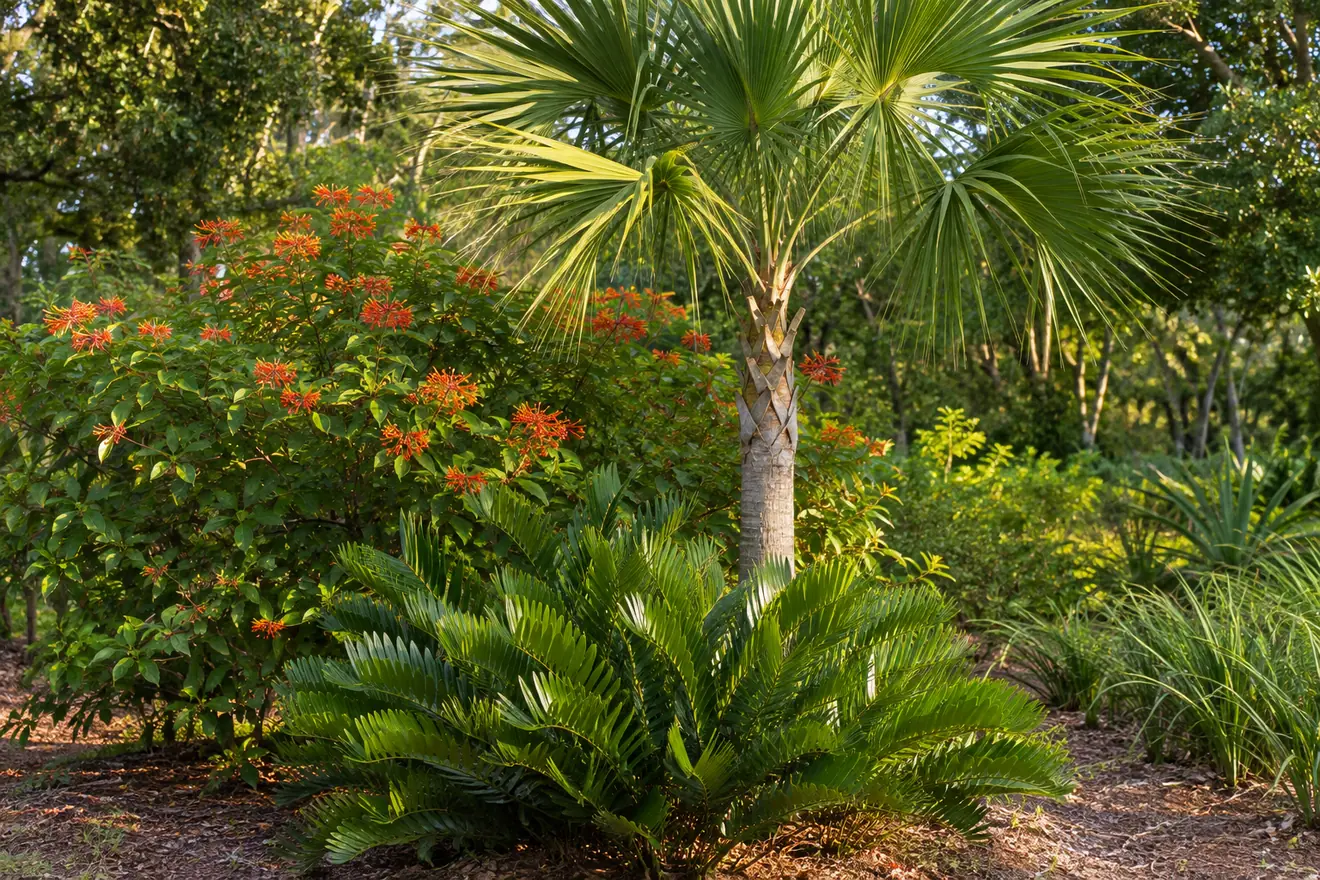
The best plants for Southwest Florida are the ones that cope with heat, sandy and often alkaline soil, salt spray, summer downpours and an occasional cold snap. Native plants such as sabal palm, coontie, firebush and coco plum meet most of those tests, and well-known non-natives such as foxtail palm, ixora and bougainvillea work where the site suits them. This guide lists common palms, shrubs, ground covers and seasonal flowers with the light they need and what to watch for. For planting steps, see choosing and planting, and for a water-saving approach see Florida-friendly landscaping.
How to Choose Landscaping Plants for Southwest Florida
Check five things before you buy, and write them down for each planting bed.
- Light: hours of direct sun on the spot, not what the plant tag says in general.
- Mature size: a royal palm reaches 50 to 70 feet tall and 20 to 25 feet wide, according to UF/IFAS, which rules it out for most small lots.
- Cold tolerance: several popular tropicals are damaged by a freeze (see the cold section below).
- Salt exposure: plants near the coast, canals or the Gulf face salt spray, and some tolerate it much better than others.
- Soil: alkaline soil next to sidewalks and foundations causes yellowing in plants that prefer acidic conditions.
Best Palms for Southwest Florida Landscapes
| Plant | Light | Notes |
|---|---|---|
| Sabal (cabbage) palm | Sun to part shade | Native and Florida's state tree; tough and wind-tolerant. |
| Foxtail palm | Full sun | Medium size, sheds old fronds on its own. |
| Adonidia (Christmas) palm | Sun | Compact, popular near entries and pools; sensitive to cold. |
| Areca palm | Sun to part shade | Clustering palm often used for screening; needs room to spread. |
| Pygmy date palm | Sun to part shade | Small, with sharp spines at the base of the fronds; keep away from walkways. |
| Royal palm | Full sun | Very tall; drops large, heavy fronds, so give it plenty of space. |
UF/IFAS describes the sabal palm as reaching about 40 feet and as fairly tolerant of salt spray on the foliage but intolerant of salt in the root zone, so it suits coastal yards with good drainage better than a low spot that floods with brackish water. Royal palm fronds are 10 to 15 feet long and can weigh upwards of 50 pounds, which is why UF/IFAS advises planting the tree away from people and property. For pruning and care once palms are in the ground, see palm tree trimming and care.
Best Shrubs and Hedges for Southwest Florida
| Plant | Light | Notes |
|---|---|---|
| Coco plum | Sun to part shade | Native, salt-tolerant hedge plant. |
| Firebush | Sun | Native; flowers most of the year and attracts butterflies and hummingbirds. |
| Simpson's stopper | Sun to part shade | Native shrub or small tree, good for informal screens. |
| Ixora | Sun | Bright flower clusters; leaves can yellow in alkaline soil. |
| Croton | Sun to part shade | Colorful foliage; damaged by cold snaps. |
| Bougainvillea | Full sun | Drought-tolerant and thorny; flowers best when not overwatered. |
| Hibiscus | Sun | Large flowers; watch for whiteflies and other sap-sucking pests. |
Coco plum is the usual choice for a trimmed hedge. UF/IFAS gives a planting distance of 36 to 50 inches, about a year for a dense hedge to form, and two or three trimmings a year afterward. Firebush grows in full sun, is heat and drought tolerant once established, and blooms from late spring until the first frost; it can reach about 15 feet in South Florida but can be kept to 5 to 8 feet. Ixora prefers moist, acidic, well-drained soil, and UF/IFAS notes that alkaline sites can cause iron and manganese deficiencies that yellow new growth. Bougainvillea needs full sun, and too much water or nitrogen fertilizer gives leaves instead of flowers. Looking for screening? See privacy hedges and screening plants.
Ground Covers and Seasonal Color
- Coontie: a native, low-growing cycad that tolerates dry, sandy soil.
- Pentas: heat-tolerant flowers that attract butterflies; often grown year-round here.
- Begonias and New Guinea impatiens: used for shade color, mostly in the cooler months.
Coontie is the only cycad native to the United States. It stays about 2 to 3 feet tall, does best with some shade but tolerates full sun, and is highly drought tolerant once established, according to UF/IFAS. Space plants 3 to 5 feet apart in masses. It is also the preferred food of the larvae of the rare atala butterfly. UF/IFAS notes that the underground stem is toxic unless properly prepared, so do not eat any part of it.
Which Southwest Florida Plants Are Sensitive to Cold?
Southwest Florida winters are mild, but cold snaps can still hurt tropical plants. UF/IFAS gives these limits:
- Christmas (adonidia) palm: only cold hardy to about 30°F.
- Royal palm: survives to about 28°F and can grow as far north as USDA zone 10A.
- Coco plum: freezing temperatures, typically below 32°F, often kill it.
- Ixora: frost or freeze injures it, and zone 9B is its northern limit.
- Bougainvillea: needs protection from frost and freeze.
Natives such as firebush (rated for USDA zones 8 to 11) and coontie (zones 8b to 11) have more cold margin.
Frequently Asked Questions
What are the best plants for Southwest Florida?
Native plants are the safest start: sabal palm, coontie, firebush, coco plum and Simpson's stopper. They are adapted to the climate and soil, and several are drought tolerant once established. Add non-natives such as ixora, pentas or bougainvillea where the sun and soil match what they need.
What are the best low-maintenance plants for Southwest Florida?
Coontie, firebush and bougainvillea ask for the least. UF/IFAS says coontie rarely needs water once established, and firebush is heat and drought tolerant. Bougainvillea blooms better when the soil stays fairly dry, so skip extra irrigation. See watering restrictions and irrigation systems for local watering rules.
Which plants tolerate salt spray near the coast or Gulf?
Coco plum is very salt tolerant once established, and firebush and coontie are moderately tolerant of salt spray, per UF/IFAS. Sabal palm tolerates salt spray on the foliage but not salt in the root zone. Check with the UF/IFAS Extension office in Lee County for plants suited to your exact exposure.
What palms are best for a small yard?
Compact choices include the adonidia (Christmas) palm, which UF/IFAS lists at about 25 feet tall with a canopy spread of 5 to 8 feet, and the pygmy date palm. Avoid royal palms on small lots because of their 20 to 25 foot spread and heavy fronds. Keep spiny pygmy date palms away from walkways.
What should I plant for a tropical look?
Palms, croton, hibiscus and bougainvillea give a tropical look, but most of them need protection in a cold snap. See tropical landscaping plants and design ideas. Around a pool, pick plants that will not drop heavy fronds into the water; see pool landscaping plants and design tips.
Plant availability and performance vary by site, so confirm choices with a local nursery or the UF/IFAS Extension office in Lee County. For timing, see seasonal color planting.